
$3,630.00
Welcome!
AP Statistics and AI
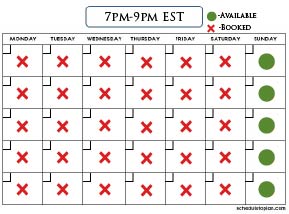
Start Date: 10/04/2026
33 Sessions=66 Instructional Hours

- U.S. Based World Class Education
- Traditional and Classical Learning are our Foundations to Deliver Prosperous Results
- Experienced, licensed teachers
- Carefully planned teaching instruction
- Increased responsibility for learning
- Setting appropriate achievement goals
- Assessment of the individual student’s needs
- Rigorous and dynamic sessions that build up test-taking skills
- 2-hour session/once per week
Class Curriculum
- The Statistical Investigation Cycle
- Types of Data
- Populations and Samples
- Parameters and Statistics
- Graphs for Categorical Data
- Graphs for Quantitative Data
- Describing Distributions
- Measures of Center and Spread
- Z-Scores and Percentiles
- Normal Model and Empirical Rule
- Two-Way Tables
- Conditional Distributions
- Simpson’s Paradox
- Sampling Methods and Bias
- Randomization and Study Design
- Experiments vs. Observational Studies
- Confounding and Causation
- A/B Testing
- Probability Basics
- Law of Large Numbers
- Conditional Probability
- Bayes’ Theorem
- Random Variables and Expected Value
- Binomial Distribution
- Normal Distribution
- Sampling Distributions
- Central Limit Theorem
- Confidence Intervals
- Margin of Error
- P-Values and Significance Testing
- Type I and Type II Errors
- Statistical Power
- Inference for Proportions
- Two-Proportion Inference
- Inference for Means
- T-Distribution
- Paired and Two-Sample Tests
- Scatterplots and Correlation
- Least-Squares Regression
- Residuals and R²
- Regression Diagnostics
- Machine Learning Foundations
- Train/Test Split and Overfitting
- Classification and Logistic Regression
- Decision Trees and Neural Networks
- Generative AI and Large Language Models
- AI Bias, Fairness, and Ethics
- Capstone Data Investigation